
Table of Contents
Introduction
The Western Ghats, a majestic mountain range along the western coast of India, is one of the world’s most significant biodiversity hotspots.
The western ghats Stretching over 1,600 kilometers from the southern tip of the Indian peninsula in Tamil Nadu to the state of Gujarat, this UNESCO World Heritage Site spans six states: Tamil Nadu, Kerala, Karnataka, Goa, Maharashtra, and Gujarat. Often referred to as the “Sahyadri” in local languages, the Western Ghats are a treasure trove of ecological diversity, harboring thousands of plant and animal species, many of which are endemic to the region. The range’s unique geography, varied climate, and evolutionary history have made it a cradle of life, supporting an extraordinary array of ecosystems, from tropical rainforests to montane grasslands.
Geographical and Climatic Context
Location and Topography
The Western Ghats run parallel to India’s western coastline, forming a natural barrier between the coastal plains and the Deccan Plateau. The range begins near the border of Gujarat and Maharashtra, extending southward through Goa, Karnataka, Kerala, and Tamil Nadu, ending at the southernmost tip of the peninsula near Kanyakumari. The Ghats vary in width from 10 to 100 kilometers and rise to an average elevation of 900–1,200 meters, with the highest peak, Anamudi in Kerala, reaching 2,695 meters, making it the tallest summit in southern India.
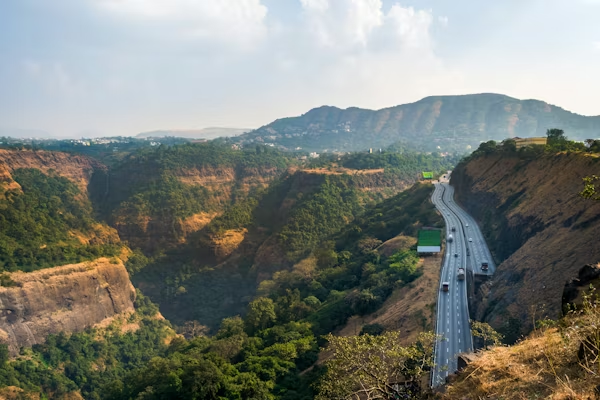
The topography of the Western Ghats is diverse, characterized by steep escarpments on the western side, rolling hills on the eastern side, and a series of plateaus, valleys, and ridges. The western escarpment drops sharply to the narrow coastal plain along the Arabian Sea, while the eastern slopes descend more gradually into the Deccan Plateau. This varied terrain creates a range of microclimates and habitats, contributing to the region’s exceptional biodiversity.
Climate and Rainfall Patterns
The Western Ghats play a critical role in shaping the climate of southern India, particularly through their interaction with the southwest monsoon. As the monsoon winds blow in from the Arabian Sea between June and September, they are forced to rise over the Ghats, leading to orographic rainfall. The western slopes of the Ghats receive heavy rainfall, ranging from 2,500 to 5,000 millimeters annually, making them one of the wettest regions in India. In contrast, the eastern slopes lie in a rain shadow, receiving significantly less rainfall, often less than 1,000 mm per year.
The climate across the Western Ghats varies with altitude and latitude. The lower elevations experience a tropical climate with high temperatures and humidity, while the higher elevations, such as the Nilgiri and Palani Hills, have a cooler, temperate climate, with temperatures dropping to as low as 5°C in winter. This altitudinal gradient creates a spectrum of climatic zones, from tropical rainforests at the base to montane grasslands and shola forests (patches of stunted evergreen forests interspersed with grasslands) at higher elevations.
Ecological Significance
A Global Biodiversity Hotspot
The Western Ghats were designated as a biodiversity hotspot by Conservation International due to their high levels of species richness and endemism, coupled with significant threats from human activity. To qualify as a biodiversity hotspot, a region must have at least 1,500 endemic plant species and have lost at least 70% of its original habitat. The Western Ghats meet these criteria, with over 5,000 species of flowering plants, of which around 1,700 are endemic, and a significant portion of its original forest cover lost to deforestation and development.
The Ghats are also part of the Western Ghats-Sri Lanka biodiversity hotspot, which includes the island of Sri Lanka, highlighting the shared evolutionary history of the two regions. This hotspot is one of 36 globally recognized biodiversity hotspots, underscoring its importance on a planetary scale.
Evolutionary History
The biodiversity of the Western Ghats is a product of millions of years of geological and climatic evolution. The range formed around 150 million years ago during the breakup of the supercontinent Gondwana, when the Indian Plate separated from Africa and began its northward journey. The Ghats were uplifted during the late Cretaceous period, and their isolation from other mountain ranges allowed for the evolution of unique species over millions of years.
The region’s long history of climatic stability, particularly in its wetter western slopes, provided a refuge for species during periods of global climate change, such as the Ice Ages. This stability, combined with the varied topography and microclimates, fostered speciation, leading to the high levels of endemism observed today. For example, many amphibians and reptiles in the Ghats have evolved in isolation, resulting in species that are found nowhere else on Earth.
Biodiversity of the Western Ghats
Flora Diversity
The Western Ghats are a botanical paradise, supporting an incredible diversity of plant life across their varied ecosystems. The region is home to over 5,000 species of flowering plants, 1,700 of which are endemic. The vegetation types vary with altitude, rainfall, and soil conditions, creating a mosaic of habitats.
- Tropical Rainforests: The lowland and mid-elevation regions of the western slopes are dominated by evergreen rainforests, characterized by tall trees with dense canopies, epiphytes, and lianas. Species like the wild nutmeg (Myristica fragrans) and the Malabar teak (Tectona grandis) thrive here, alongside a rich understory of ferns and orchids.
- Montane Shola Forests: At elevations above 1,500 meters, shola forests dominate, consisting of stunted evergreen trees such as Rhododendron arboreum and Syzygium species, interspersed with rolling grasslands. These forests are unique to the Western Ghats and play a crucial role in water retention and soil conservation.
- Deciduous Forests: The drier eastern slopes support tropical deciduous forests, where trees like teak (Tectona grandis) and sandalwood (Santalum album) shed their leaves seasonally to conserve water. These forests are less dense than rainforests and support a different suite of plant species.
- Grasslands and Scrublands: High-altitude grasslands, often found alongside shola forests, are home to species like the endemic Nilgiri tahr, while scrublands in drier areas support thorny shrubs and grasses adapted to low rainfall.
The Western Ghats are also a center of diversity for economically important plants, including spices like black pepper and cardamom, as well as medicinal plants such as the Indian ginseng (Withania somnifera). The region’s floristic diversity has been a source of sustenance and cultural significance for local communities for centuries.
Fauna Diversity
The animal life of the Western Ghats is equally remarkable, with a high degree of endemism across taxonomic groups. The region supports over 500 species of birds, 225 species of reptiles, 200 species of amphibians, and 140 species of mammals, many of which are found nowhere else.
- Mammals: The Western Ghats are home to iconic mammals such as the Asian elephant, Bengal tiger, and leopard. The Nilgiri tahr, a mountain goat endemic to the region, is a flagship species, found in the high-altitude grasslands of the Nilgiris and Anamalai Hills. The lion-tailed macaque, a primate with a distinctive mane, is another endemic species, restricted to the rainforests of the Ghats.
- Birds: The avian diversity of the Ghats includes endemics like the Malabar grey hornbill, Nilgiri wood pigeon, and the vibrant Malabar trogon. The region is a critical habitat for migratory birds, such as the Amur falcon, which passes through during its annual migration.
- Amphibians and Reptiles: The Western Ghats are a global hotspot for amphibian diversity, with over 80% of the region’s 200 amphibian species being endemic. Frogs like the purple frog (Nasikabatrachus sahyadrensis), with its bizarre appearance, and the Malabar gliding frog are unique to the Ghats. Reptiles include the king cobra, the largest venomous snake in the world, and the endemic Cochin forest cane turtle.
- Invertebrates: The Ghats are also rich in invertebrate life, including numerous species of butterflies, moths, and spiders. The Atlas moth, one of the largest moths in the world, is a notable resident, as are several endemic species of damselflies and dragonflies.
The high endemism among the fauna of the Western Ghats is a testament to the region’s role as an evolutionary crucible, where species have adapted to the diverse habitats and microclimates over millions of years.
Threats to Biodiversity
Deforestation and Habitat Loss
The Western Ghats have lost over 70% of their original forest cover due to human activities, making habitat loss the most significant threat to the region’s biodiversity. Deforestation began during the colonial period, when large tracts of forest were cleared for tea, coffee, and rubber plantations. Today, agriculture, urbanization, and infrastructure development continue to encroach on natural habitats, fragmenting ecosystems and isolating populations of endangered species.
Agricultural Expansion
The conversion of forest land for agriculture, particularly for cash crops like tea, coffee, and spices, has led to the destruction of critical habitats. Monoculture plantations reduce biodiversity by replacing diverse forest ecosystems with single-species crops, which also require pesticides and fertilizers that pollute soil and water. The expansion of agriculture has particularly affected lowland rainforests, which are among the most biodiverse habitats in the Ghats.
Infrastructure Development
The construction of roads, dams, and railways has further fragmented the Western Ghats, disrupting wildlife corridors and altering hydrological systems. Large hydroelectric projects, such as the Sharavathi and Kali River dams, have submerged vast areas of forest and displaced both human and animal populations. Roads and railways increase human access to remote areas, leading to illegal logging, poaching, and encroachment.
Climate Change
Climate change poses a growing threat to the Western Ghats, with rising temperatures and changing rainfall patterns affecting the region’s ecosystems. Higher temperatures are pushing species to higher altitudes, but many endemic species, such as the Nilgiri tahr, have nowhere left to go as they reach the upper limits of their habitat. Changes in monsoon patterns are also affecting the phenology of plants, disrupting flowering and fruiting cycles, which in turn impacts pollinators and herbivores.
Invasive Species and Human-Wildlife Conflict
Invasive species, such as lantana and eucalyptus, introduced during colonial times, have spread across the Ghats, outcompeting native vegetation and altering habitats. Human-wildlife conflict is another challenge, as expanding human settlements encroach on wildlife habitats, leading to conflicts with species like elephants and leopards. Crop raiding by elephants and attacks on livestock by predators often result in retaliatory killings, further threatening endangered species.
Conservation Efforts
Protected Areas and National Parks
The Western Ghats are home to numerous protected areas, including national parks, wildlife sanctuaries, and biosphere reserves, which play a crucial role in conserving biodiversity. Notable protected areas include:
- Silent Valley National Park (Kerala): A pristine rainforest that was saved from a proposed hydroelectric project in the 1980s due to public protests, Silent Valley is a stronghold for the lion-tailed macaque and other endemic species.
- Periyar National Park (Kerala): Known for its population of Asian elephants and tigers, Periyar is also a critical watershed for the Periyar River, which supports millions of people downstream.
- Bandipur and Nagarhole National Parks (Karnataka): These contiguous parks form part of the Nilgiri Biosphere Reserve, one of the largest protected areas in the Ghats, and are home to a significant population of tigers and elephants.
- Anamalai Tiger Reserve (Tamil Nadu): This reserve protects the Anamalai Hills, a biodiversity-rich area with large populations of Nilgiri tahr and other endemic species.
These protected areas are vital for preserving the Ghats’ biodiversity, but they cover only a fraction of the region, leaving much of the landscape vulnerable to exploitation.
Community-Led Conservation

Local communities, including indigenous tribes like the Todas, Kadars, and Irulas, have a deep connection with the Western Ghats and have played a significant role in conservation. Traditional practices, such as sacred groves—patches of forest protected for religious reasons—have helped preserve biodiversity in many areas. Community-led initiatives, such as the restoration of degraded forests and the promotion of sustainable agriculture, are gaining traction, with organizations working alongside locals to balance conservation with livelihoods.
Government and International Support
The Indian government has implemented several policies to protect the Western Ghats, including the Forest Conservation Act and the Wildlife Protection Act. In 2012, the Western Ghats were inscribed as a UNESCO World Heritage Site, recognizing their global ecological importance. The Western Ghats Ecology Expert Panel (WGEEP), chaired by ecologist Madhav Gadgil, recommended classifying the entire region into ecologically sensitive zones with varying levels of protection, but political and economic pressures have delayed the implementation of these recommendations.
International organizations, such as the World Wildlife Fund (WWF) and Conservation International, have also supported conservation efforts in the Ghats, funding projects to restore habitats, monitor endangered species, and raise awareness about the region’s ecological value.
Ecotourism and Sustainable Development
Ecotourism has emerged as a tool for conservation in the Western Ghats, providing economic incentives to protect natural areas. Destinations like Munnar, Wayanad, and Coorg attract tourists with their scenic beauty, wildlife, and cultural heritage. However, ecotourism must be carefully managed to avoid environmental degradation, with a focus on low-impact activities, community involvement, and education about the region’s biodiversity.
Cultural and Economic Significance
Indigenous Communities and Traditional Knowledge
The Western Ghats are home to numerous indigenous communities whose livelihoods and cultures are deeply intertwined with the region’s ecosystems. Tribes like the Todas of the Nilgiris have a pastoral lifestyle, relying on the grasslands for grazing their buffaloes, while the Kadars of Kerala harvest forest products like honey and medicinal plants. These communities possess a wealth of traditional knowledge about the Ghats’ flora and fauna, which has been passed down through generations and can inform modern conservation strategies.
Economic Contributions
The Western Ghats contribute significantly to India’s economy through agriculture, forestry, and tourism. The region is a major producer of tea, coffee, cardamom, and pepper, with plantations dating back to the colonial era. Rivers originating in the Ghats, such as the Cauvery, Krishna, and Godavari, provide water for irrigation and hydroelectric power, supporting millions of people across southern India. The tourism industry, driven by the Ghats’ natural beauty and biodiversity, also generates substantial revenue, particularly in states like Kerala and Karnataka.
Conclusion
The Western Ghats stand as a testament to the beauty and complexity of nature, a biodiversity hotspot that has nurtured life for millions of years. Their towering peaks, lush forests, and vibrant ecosystems are home to an extraordinary array of species, many of which are found nowhere else on Earth. However, the Ghats face unprecedented threats from deforestation, climate change, and human encroachment, which jeopardize their ecological integrity and the livelihoods of the communities that depend on them.
Conservation efforts, from protected areas and community-led initiatives to government policies and international support, are critical to preserving this natural heritage. The Western Ghats are not just a mountain range; they are a living, breathing ecosystem that sustains life, inspires awe, and reminds us of our responsibility to protect the planet’s most precious treasures for generations to come.
Guindy National Park: Chennai’s Urban Wildlife Oasis
Papikonda National Park: A Wilderness Jewel in the Eastern Ghats
Discover Jim Corbett: India’s First Wildlife Sanctuary



Leave a Reply