
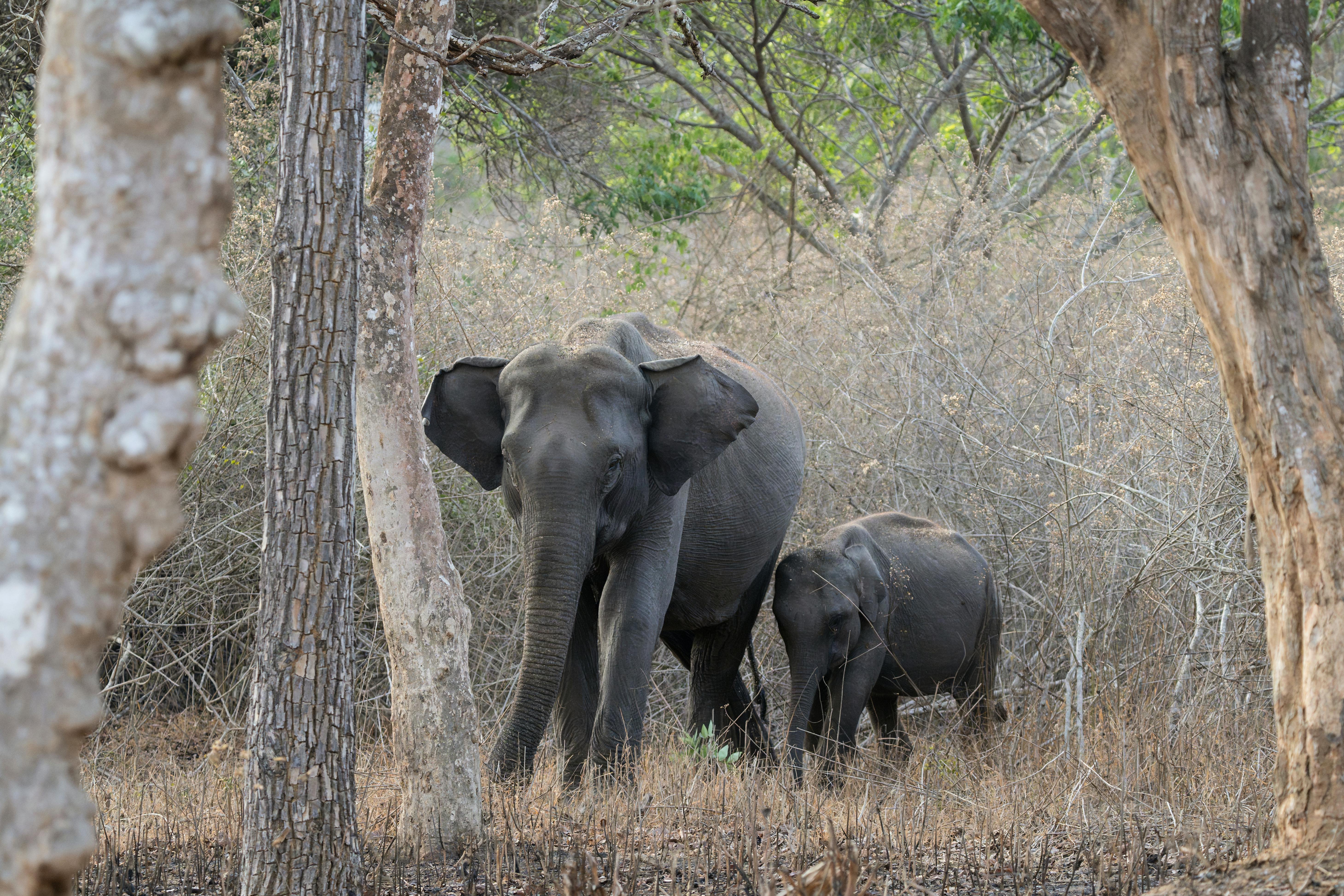
A deep-dive into the Mysuru Elephant Reserve in Karnataka — India’s elephant capital. Explore its geography, wildlife, protected areas, conservation challenges, and its role in the Nilgiri landscape
Table of Contents
Introduction
Karnataka is home to the largest wild elephant population of any state in India. With over 6,395 elephants counted in its 2023 census, the state holds roughly a quarter of India’s entire wild elephant population and is the single biggest stronghold for the Asian elephant anywhere on Earth. At the centre of this achievement sits the Mysuru Elephant Reserve — a vast, ecologically rich protected landscape in the southern part of the state that has been quietly doing the work of keeping these animals alive and moving for over two decades.
The Mysuru Elephant Reserve was officially notified on 25 November 2002 by the Karnataka Forest Department under Project Elephant guidelines issued by the Ministry of Environment, Forest and Climate Change (MoEF&CC), Government of India. The reserve includes reserve forests and protected areas spread across the districts of Bengaluru Urban, Bengaluru Rural, Chamarajanagar, Mandya, Mysuru, Kodagu, and Hassan.
Later, on 26 March 2015, the Karnataka Forest Department declared an extension of the reserve by including the Bhadra Wildlife Sanctuary and adjoining areas covering 1,331.94 sq km, known as the “Mysuru Elephant Reserve Extension.”
Covering a total area of 8,055.94 sq km, the reserve lies in southern Karnataka and shares ecological connectivity with the Wayanad Elephant Reserve in Kerala and the Nilgiri Elephant Reserve in Tamil Nadu.
According to the Forest Survey of India (FSI) Forest Type Classification (2009), the reserve supports a remarkable diversity of forest ecosystems. These include tropical evergreen forests, semi-evergreen forests, moist and dry deciduous forests, teak forests, bamboo brakes, mangrove scrub, thorn forests, grasslands, scrublands, and the Nilgiri subtropical hill forests. This wide range of habitats makes the reserve one of the most ecologically significant elephant landscapes in southern India.

image credit : Deepak Ramesha
Location and Size
The Mysuru Elephant Reserve is situated in the southern districts of Karnataka, covering portions of Mysuru, Chamarajanagara, Kodagu, and Hassan districts. Formally notified on 26 March 2002, it was Karnataka’s first declared elephant reserve under Project Elephant. The reserve covers an area of approximately 8,055 sq km, making it one of the largest elephant reserves in India by landmass.
Geographically, the reserve occupies the transition zone between the Western Ghats and the Deccan Plateau — a landscape of forested hills, river valleys, and grassland patches that has historically supported large mammal populations. The terrain rises from the plains of the Mysuru Plateau into the forested ridges of the Western Ghats, creating a mosaic of habitat types that suits elephants’ need for diverse forage across seasons.
The Protected Areas Within the Reserve
The Mysuru Elephant Reserve is not a single contiguous forest block — it is a landscape-level unit that encompasses several individually protected areas along with reserve forests and buffer zones. The most significant components include:
Bandipur Tiger Reserve is the centrepiece of the reserve. Located in the Chamarajanagara district at the tri-junction of Karnataka, Tamil Nadu, and Kerala, Bandipur is among the most wildlife-rich protected areas in India. According to the 2023 Karnataka elephant census, the Bandipur Tiger Reserve alone recorded 1,116 elephants — the highest of any single protected area in the state. Bandipur also holds the country’s second-largest tiger population according to the All India Tiger Estimation Report 2022. The forests here are predominantly southern tropical dry deciduous, transitioning into moist deciduous as elevation rises.
Nagarahole Tiger Reserve lies to the northwest of Bandipur and is separated from it by a narrow agricultural corridor. The Kabini River, whose reservoir forms a distinctive landscape in the southern section of Nagarahole, attracts large herds of elephants, especially in summer when water is scarce across the wider landscape. The 2023 census recorded 831 elephants in Nagarahole — the second highest in Karnataka after Bandipur. Nagarahole was a hunting ground for the Mysore royal family before independence and was declared a sanctuary in 1955.
Biligiri Rangaswamy Temple (BRT) Tiger Reserve covers the eastern edge of the reserve in the Yelandur and Kollegal talukas of Chamarajanagara district. The BRT hills are an ecological bridge between the Western Ghats and the Eastern Ghats, a unique feature that gives them exceptional biodiversity value. The hills are contiguous with the Sathyamangalam Wildlife Sanctuary in Tamil Nadu, forming a continuous forest tract that connects the two mountain ranges.
MM Hills Wildlife Sanctuary in the Hassan and Chamarajanagara districts forms another component. The hills here are part of the broader elephant movement corridor connecting Cauvery Wildlife Sanctuary and the forests further east.
The Nilgiri Connection
The Mysuru Elephant Reserve does not stand alone. It is the northern and western anchor of one of the most important wildlife landscapes in Asia — the Nilgiri Biosphere Reserve. This transboundary landscape connects forests in Karnataka, Tamil Nadu, and Kerala in an almost continuous band of protected territory.
To the south, Bandipur connects directly with Mudumalai National Park in Tamil Nadu and Wayanad Wildlife Sanctuary in Kerala. Together, these three form a single functional habitat unit where elephants, tigers, leopards, gaur, and hundreds of other species move freely across state boundaries. The Mysuru reserve feeds elephants into this larger system and receives them back. Corridor management along NH-67 (the Mysore-Ooty highway that cuts through Bandipur) has been a long-running conservation challenge — night traffic restrictions on this highway were hard-won but are widely credited with reducing road kills in this critical corridor.
To the north, the Mysuru reserve connects with the Cauvery Wildlife Sanctuary and the Male Mahadeshwara Wildlife Sanctuary, extending the elephant landscape further into the interior of Karnataka.
Vegetation and Flora
The vegetation within the Mysuru Elephant Reserve spans multiple forest types, shaped largely by rainfall gradients and elevation. The western flanks, facing the Arabian Sea, receive heavy monsoon rainfall and support moist deciduous and semi-evergreen forests. The eastern parts, lying in the rain shadow, carry southern dry deciduous forests dominated by teak, rosewood, and sandalwood.
The understorey across much of the reserve is rich in bamboo — Bambusa arundinacea and Dendrocalamus strictus — both of which are important food sources for elephants. Grasses in clearings and along watercourses provide year-round grazing. The Kabini reservoir backwaters create a unique wetland-grassland interface, drawing elephants in large aggregations during the dry season.
The reserve also contains significant plantations of eucalyptus, kaniar (Bauhinia purpurea), and Gulabi Siris in forest-fringe areas — a legacy of historical forest management that conservationists have been working to replace with native vegetation.
Wildlife Beyond Elephants
While elephants define the Mysuru reserve’s conservation identity, the landscape supports an extraordinary range of wildlife. Karnataka’s elephant country is simultaneously tiger country, leopard country, and home to the country’s largest concentrations of several other species.
The reserve supports significant populations of Bengal tigers, Indian leopards, dholes (Indian wild dogs), sloth bears, gaur, sambar deer, spotted deer (chital), Indian giant squirrels, and a rich bird community. The Nagarahole forests in particular are renowned for the density of dholes — one of Asia’s most endangered carnivores and an indicator of healthy prey populations.
The Indian gaur (bison) found in these forests is among the largest land animals in Asia, and herds of several hundred animals are not uncommon in Bandipur and Nagarahole.
Karnataka’s Elephant Population — A Closer Look
The 2023 Karnataka elephant census carried out by the Karnataka Forest Department with technical support from the Indian Institute of Science (IISc) under ecologist Prof. Raman Sukumar used a combination of direct count, dung count, and waterhole count methods across 32 Forest Divisions. The total count came to 6,395 elephants, up from 6,049 in 2017.
This increase was partly attributed to improved habitat conditions in Karnataka, elephants returning from Kerala after the dry year of 2017, and the inclusion of elephant concentrations in coffee estates in Hassan and Kodagu districts — private lands that pose unique challenges for conservation.
Approximately 161 of the counted elephants were found on private lands, including coffee plantations, which are outside formal protection but often provide important seasonal habitat. Managing human-elephant relations on these private lands is one of the more complex conservation challenges in the Mysuru landscape.
Human-Elephant Conflict
The prosperity of the Mysuru Elephant Reserve comes with a significant cost — human-elephant conflict. As elephant numbers grow and agricultural land expands at forest margins, elephants increasingly raid crops, destroy property, and occasionally injure or kill people. The forest-agriculture boundary in Karnataka is among the most conflict-prone in India.
Karnataka has been a testing ground for innovative conflict-mitigation approaches. The RE-HAB Project (Reducing Elephant-Human Attacks using Bees), launched by the Khadi and Village Industries Commission (KVIC), has been piloted near Nagarahole National Park. The project installs beehive fences along forest edges — exploiting the natural aversion elephants have to bees — to deter them from entering farmland. The intervention is low-cost, community-friendly, and ecologically benign, and has shown promise as a scalable tool.
Solar-powered electric fencing, early warning systems, and compensation schemes for crop damage are all part of Karnataka’s conflict management toolkit. But with thousands of kilometres of forest edge and a growing elephant population, the challenge remains acute.
Conservation Significance
The Mysuru Elephant Reserve is more than a wildlife management unit — it is a symbol of what sustained, landscape-scale conservation can achieve. Karnataka’s elephant population has grown steadily since Project Elephant began in 1992, a trajectory that reflects both the quality of habitat protection and the effectiveness of anti-poaching measures.
The reserve is also a hub for elephant research. Studies on ranging behaviour, social structure, genetics, and human-elephant conflict have been conducted here by the Wildlife Institute of India, IISc, and international collaborators. This research directly informs management decisions — for the Mysuru reserve and for elephant conservation across South and Southeast Asia.
With Bandipur and Nagarahole as its core, and connections to the broader Nilgiri landscape, the Mysuru Elephant Reserve is arguably the most important single unit of Asian elephant conservation on the planet.
Quick Facts
| Feature | Details |
|---|---|
| State | Karnataka |
| Notification Year | 2002 |
| Area | ~8,055 sq km |
| Districts | Mysuru, Chamarajanagara, Kodagu, Hassan |
| Key Protected Areas | Bandipur TR, Nagarahole TR, BRT TR, MM Hills WLS |
| Elephant Population | ~6,395 (Karnataka, 2023 census) |
| Landscape | Nilgiri Biosphere Reserve |
Read Also
What are Elephant Reserve In India



Leave a Reply