
Uncover Ahoi Ashtami, a heartfelt Indian festival where mothers fast under the stars for their children’s well-being. Explore rituals, stories, and traditions in this guide to maternal devotion.
Table of Contents
Introduction to Ahoi Ashtami: A Symphony of Maternal Sacrifice and Celestial Hope
Imagine a twilight sky in northern India, where the first stars emerge like shy promises, and mothers, veiled in the soft glow of oil lamps, gaze upward through a simple kitchen sieve. This is Ahoi Ashtami—a festival that captures the raw, universal essence of a mother’s love, wrapped in ancient rituals and whispered prayers.
Celebrated on the eighth day (Ashtami) of the waning moon phase in the Hindu month of Kartik, Ahoi Ashtami honors Goddess Ahoi Mata, a divine protector invoked by mothers fasting from dawn until these evening stars appear.It’s a nirjala vrat, meaning no food or water, dedicated not to romance like Valentine’s Day, but to the profound wish for children’s health, happiness, and long lives.
For outsiders peering into India’s vibrant cultural mosaic, Ahoi Ashtami might evoke the quiet intensity of a mother’s vigil at a child’s bedside during illness—fierce, selfless, and eternally hopeful. Falling just days before the dazzling Diwali festival of lights, it adds a tender prelude to the celebrations, observed mainly in states like Uttar Pradesh, Bihar, Haryana, and Delhi. Women don colorful sarees in reds and greens, reminiscent of autumn leaves, and gather in courtyards to draw the goddess’s image on mud walls with cow dung paste—a humble yet sacred art form.
If you’ve ever wondered about “ahoi ashtami” while scrolling through images of henna-adorned hands or festive sweets, this guide is your gentle entryway. We’ll unravel the “ahoi ashtami vrat,” the emotional “ahoi ashtami ki katha,” and share “happy ahoi ashtami wishes” that bridge cultures. In a world where parenting feels like navigating uncharted stars, this festival reminds us: a mother’s prayers can light the darkest nights. Whether you’re a curious traveler, a diaspora parent, or simply moved by stories of devotion, join us in exploring this touching tradition—where love fasts, and stars answer.
The Origins and Heart of Ahoi Ashtami: Why Mothers Look to the Stars
To grasp Ahoi Ashtami, we must travel back through India’s oral tapestries, where folklore blooms like monsoon flowers. The festival’s roots lie in medieval North Indian villages, a time when child mortality cast long shadows over joyful births. “Ahoi” refers to a compassionate mother goddess, often depicted as a serene figure with a lion mount, cradling her young—much like the nurturing archetypes in Greek myths of Demeter or Roman tales of Ceres. “Ashtami,” the eighth lunar day, symbolizes completeness and transition, as the moon fades to make way for Diwali’s renewal.
The significance? It’s a bulwark against fate’s cruelties. Legends whisper of the vrat emerging as a ritual shield, born from a mother’s grief turned to grace. Central to “ahoi ashtami vrat katha,” a poignant story unfolds: a woman unwittingly harms a creature’s offspring, cursing her own children to yearly loss. Through fasting and starlit pleas to Ahoi Mata, she breaks the cycle, her devotion resurrecting what was lost. This narrative, shared in evening circles much like bedtime stories in the West, teaches that haste harms, but pure intent heals—echoing timeless proverbs like “What goes around comes around.”
For foreigners, think of it as Mother’s Day meets a celestial vigil: a day to honor the quiet warriors who shape futures. Astrologically, the waning moon’s energy purifies, aligning with nakshatras (lunar mansions) that favor family bonds. Culturally, it weaves community threads—neighbors exchange thalis of fruits and pedas (milk sweets), their laughter mingling with chants, fostering the village solidarity akin to New England town halls.
In modern India, the festival evolves inclusively, embracing prayers for daughters amid shifting gender views, much like global pushes for equality. Bollywood films like Vivah romanticize its emotional pull, drawing parallels to Hollywood’s heartfelt family dramas. Queries like “when is ahoi ashtami” spike annually, but its message is evergreen: motherhood’s love is a star that never dims. As we delve deeper, remember—Ahoi Ashtami isn’t just Indian; it’s a universal ode to the hands that hold our world steady.
When and How: Timings and the Lunar Dance of Ahoi Ashtami
Ahoi Ashtami pirouettes on the Hindu lunisolar calendar, typically gracing mid-to-late October, four days after Karwa Chauth’s spousal fasts. The Ashtami tithi often bridges midnight into the observance day, syncing the vrat with the moon’s subtle retreat—a cosmic cue for introspection before Diwali’s exuberance.
Ahoi Ashtami is celebrated on the Ashtami Tithi (eighth day) of the Krishna Paksha in the month of Kartik (October–November), about eight days before Diwali. This day marks a sacred moment in the lunar calendar when the moon begins its waning phase — a time associated with introspection, gratitude, and maternal devotion.
The most auspicious time for observing Ahoi Ashtami begins before sunset and continues until the sighting of the stars, or in some traditions, until the moonrise.
- Fasting mothers observe nirjala (without water) vrat from sunrise.
- The Ahoi Ashtami puja is performed in the evening, typically after dusk when the stars become visible.
- Women break their fast after sighting the stars or the moon, depending on regional practices.
Since the vrat aligns with the lunar movement, the exact timings of Ashtami Tithi, Puja Muhurat, and moonrise vary each year — astrologically determined using the Panchang (Hindu lunar calendar).
The moon plays a symbolic role in Ahoi Ashtami’s observance. Just as the moon waxes and wanes, reflecting change and continuity, mothers pray for the well-being and longevity of their children through life’s cycles. The waning moon during this phase is seen as a reminder of humility and renewal — virtues central to motherhood.
The Ahoi Ashtami Vrat: Fasting as an Act of Unspoken Strength
At its soul-stirring core, the “ahoi ashtami vrat” is a mother’s quiet rebellion against vulnerability—a nirjala fast from dawn’s first blush to the stars’ shy debut, forgoing even water to channel pure devotion. It’s akin to a marathon of the heart, where each hour tests and tempers resolve, all for the children’s unseen tomorrows.
Ahoi Ashtami is not just a day of ritual; it is a quiet celebration of a mother’s endurance, faith, and unconditional love. The Ahoi Ashtami Vrat (fast) is observed by mothers for the long life and prosperity of their children, yet it is much more than a traditional observance — it is an act of spiritual resilience and emotional strength expressed in silence.
The fast begins at sunrise, and many mothers observe it nirjala — abstaining from both food and water throughout the day. From morning chores to evening prayers, they go about their duties with grace, embodying patience and determination. The day-long abstinence becomes a meditation in itself — a mindful offering that channels love through sacrifice.
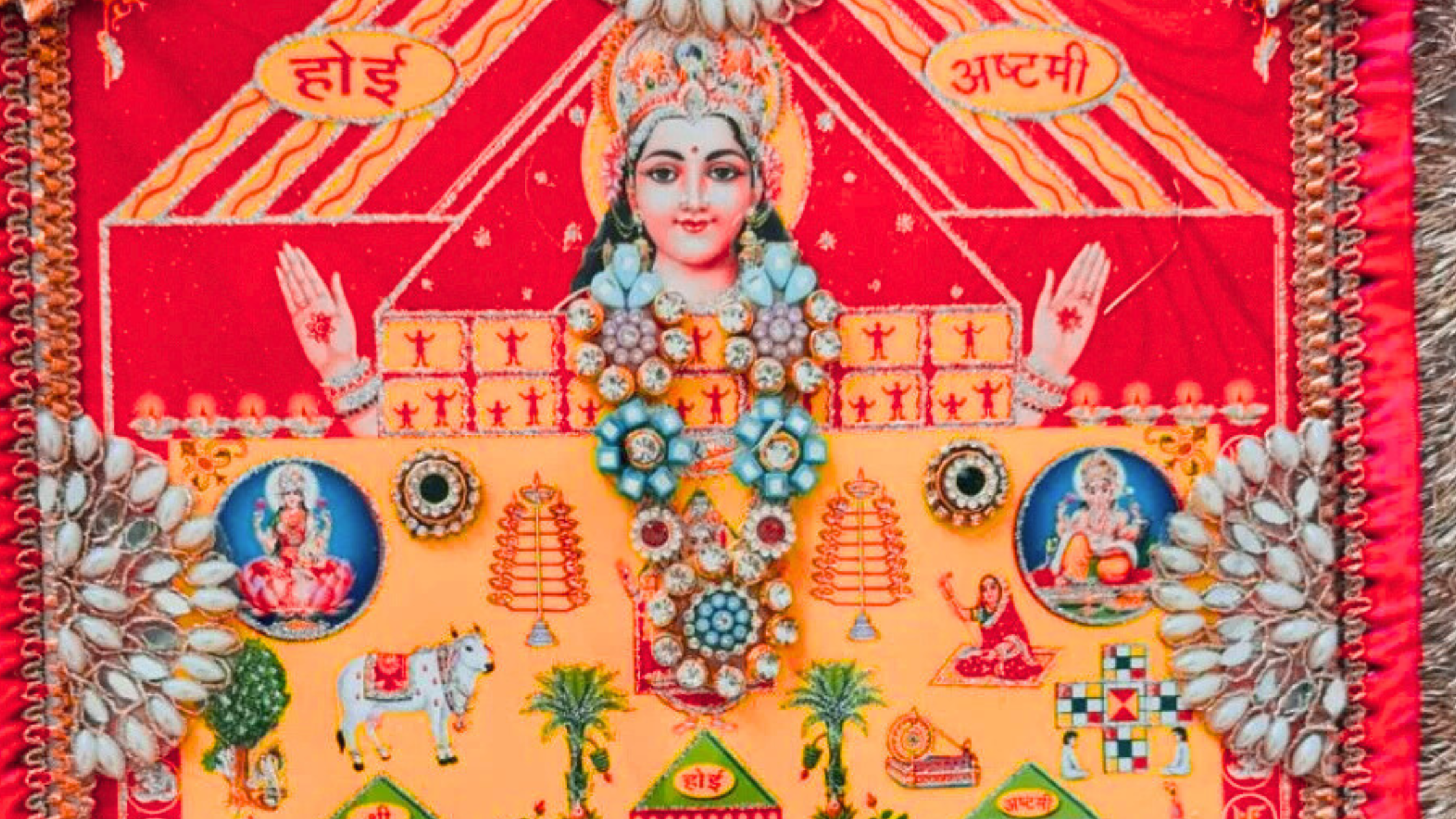
As dusk descends, mothers gather before the sacred image of Ahoi Mata, often depicted with seven sons, stars, and wildlife motifs symbolizing fertility and protection. They light lamps, draw the Ahoi figure on a wall or cloth, and recite the Ahoi Vrat Katha — a story that weaves faith with forgiveness and maternal compassion.
During the puja, women chant this sacred mantra with devotion:
“Ahoi Mata Namo Namah, Ahoi Mata Namo Namah,
Sapt Putra Saubhagyam Dehi, Ahoi Mata Namo Namah.”
(Translation: Salutations to Mother Ahoi, giver of blessings and strength.
Grant me the fortune of seven sons and everlasting well-being.)
When the stars twinkle in the night sky — or when the moon rises — the fast is broken. The first sip of water or bite of food carries the sweetness of devotion fulfilled.
Ahoi Ashtami’s fast is not about denial, but about inner awakening. It reflects the unspoken strength of women — their ability to nurture, protect, and pray without expectation. Each year, as the moon wanes and the stars shimmer, this vrat becomes a timeless reminder of a mother’s love that speaks even through silence.
Step into the Ritual: Ahoi Ashtami Puja Vidhi Unveiled

The “ahoi ashtami puja vidhi” is a poetic choreography, turning ordinary evenings into ethereal altars. Enacted in the muhurat’s embrace, it calls for humble treasures: Cow dung for sketching Ahoi Mata’s eight-cornered form (symbolizing life’s facets), a thali with flickering diya, roli paste, chandan, blooms, sweets like peda, incense, the sieve, and a water-laden kalash.
Dawn’s Gentle Vow: Rise before light, bathe in turmeric-scented water for renewal. Sankalp seals it: “In Ahoi Mata’s grace, I fast for my children’s bloom.” Sketch her image on a clean wall—lion-throned, children at her feet, stars crowning—using geru clay, a meditative doodle like adult coloring but laced with lore.
Midday’s Quiet Build: Post-sargi, arrange the thali; a printed Ahoi portrait suffices for novices, etched with eight chambers. Offer blooms, light a ghee lamp, and beseech Ganesha—remover of hurdles—like invoking good luck before a big wish.
Twilight’s Sacred Heart: Face east as dusk falls. Tilak the image with roli-chandan, ignite the central diya for a camphor aarti’s dance. Naivedya follows: Fruits, halwa, paan—chant “Ahoi Mata Ki Jai” as katha echoes. In groups, thalis circle like a friendship bracelet of faith.
Stars’ Grand Reveal: Sieve in hand, peer at emerging constellations—a moment of magic, offering arghya water skyward, mirroring dewdrops on dawn grass. Final aarti envisions kids radiant.
Vrat’s Tender Close: Through the chhalni, glimpse family; an elder feeds the first sweet bite. Prasad circles, prayers fade into night—solo or communal, bhakti binds it.
This vidhi, for “ahoi ashtami katha” lovers, weaves story into steps. It’s accessible grace: No grand temples needed, just heart and home, crafting memories that outlast the stars.
The Enchanting Ahoi Ashtami Ki Katha: A Tale That Tugs at Timeless Strings
Every puja pulses with the “ahoi ashtami ki katha,” a fable recited in hushed tones, mothers’ “Hi… Hi…” harmonies rising like a lullaby chorus. It’s the emotional anchor, blending sorrow and salvation in a narrative as gripping as a fairy tale from the Brothers Grimm.
In English, for the Curious Ear: Long ago, a moneylender’s wife scooped river clay for Diwali lamps, her tool piercing a hedgehog’s hidden brood of seven. The frantic mother cursed: “As I lose my little ones, so shall you forfeit a son each Ashtami.” Heartbreak unfolded—year by year, one of her seven boys slipped away on that day. In the seventh’s shadow, she fasted fiercely, drew Ahoi Mata’s form, and at starfall, sieved the heavens with pleas. The goddess, moved by such love, revived them all, lifting the curse with blessings eternal.
This “ahoi ashtami vrat katha” mirrors life’s fragile threads—rash acts unravel, but devotion reweaves. Enact it with a prop sieve for kids, turning tale-time into theater. It’s wisdom wrapped in wonder: Love’s light pierces curses, a lesson for any hearth, ensuring the “ahoi ashtami ki kahani” twinkles across cultures and calendars.
Conclusion: Where Stars, Faith, and Motherhood Converge
As the final lamp flickers and the moon hides behind soft veils of cloud, Ahoi Ashtami lingers — not merely as a festival, but as a feeling. It is a quiet anthem of motherhood, where every fast becomes a prayer, every mantra a heartbeat of hope. In the stillness between dusk and starlight, generations of women whisper the same vow: to love, protect, and bless their children beyond the limits of time and circumstance.
In an age of constant motion, Ahoi Ashtami reminds us to pause — to look up at the same stars our ancestors once sought for answers. The ritual may evolve, cities may hum with electric lights instead of oil lamps, but the essence remains untouched: the strength of a mother’s faith and the purity of her intent.
Ahoi Mata’s grace transcends religion and geography; she represents that universal truth — that love, when offered selflessly, becomes divine. As you read, observe, or simply reflect on this festival, may her blessings touch your heart like moonlight on still water — gentle, enduring, and filled with promise.
“Mata Ahoi ki kripa sada bani rahe,
Santan sukh aur suhaag sada amar rahe.”
(May the blessings of Mother Ahoi forever shine,
May children’s joy and family prosperity always remain divine.)
In the celestial rhythm of the waning moon and the shimmering stars, Ahoi Ashtami stands as a luminous reminder that even silence can be sacred — and a mother’s love, infinite.


Leave a Reply