
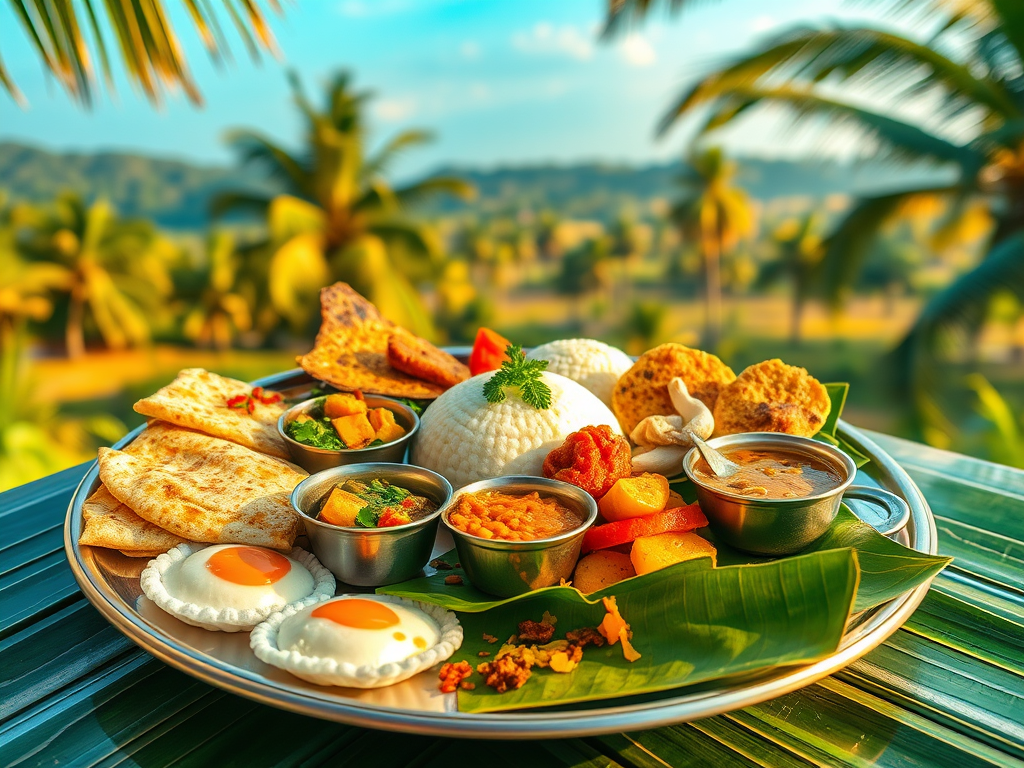
Dive into the vibrant world of South Indian cuisine with this guide to iconic dishes, tangy spices, street eats, and decadent sweets from Tamil Nadu to Kerala. Perfect for food lovers seeking authentic flavors.
Introduction: Where Rice Meets Spice and Tradition Blooms
South India, with its lush coconut groves, spice-laden hills, and sun-kissed coastlines, isn’t just a geographical marvel—it’s a gastronomic paradise that tantalizes the senses with every bite. Imagine the sizzle of mustard seeds popping in hot oil, the tang of tamarind cutting through creamy coconut gravies, or the subtle crunch of a paper-thin dosa folded around spiced potatoes. This is the essence of South Indian cuisine, a symphony of fermented rice batters, fiery curries, and soul-warming rasams that reflect the region’s diverse landscapes and ancient heritage.
Spanning five states—Tamil Nadu, Andhra Pradesh, Karnataka, Kerala, and Telangana—plus the union territory of Puducherry, South Indian food is a tapestry woven from Dravidian roots, temple traditions, and coastal bounty. Unlike the buttery richness of North Indian fare, Southern dishes lean toward lightness, tanginess, and heat, often served on banana leaves in a grand thali (platter) that encourages communal feasting. From the spice-scorched streets of Chennai to the serene backwaters of Kerala, each bite tells a story of resilience, seasonality, and unbridled joy.
Whether you’re a globetrotting foodie plotting your next trip or a home cook craving authenticity, this journey will transport you through steaming idlis, coconut-laced appams, and jaggery-sweetened payasams. We’ll explore history, ingredients, must-try dishes, street-side delights, and sweets that melt in your mouth. Grab a virtual spoon—our flavorful odyssey begins now.
The Ancient Roots: A Brief History of South Indian Cuisine
South Indian cuisine isn’t a modern invention; it’s a living archive dating back over 4,000 years to the Dravidian civilizations that flourished in the subcontinent. Archaeological whispers from the Indus Valley Civilization (around 3300–1300 BCE) hint at early rice cultivation and lentil-based dishes, but it’s the Sangam literature of ancient Tamil Nadu—poems from 300 BCE to 300 CE—that first romanticizes feasts of rice, fish, and wild greens. Temple towns like Madurai and Tirupati became culinary crucibles, where Brahmin priests refined vegetarian recipes using locally sourced ingredients, turning sattvic (pure) meals into sacred offerings.
Colonial encounters added layers: Portuguese traders introduced chilies in the 16th century, transforming mild black pepper-based heat into the fiery profiles we know today. Meanwhile, the Chettiar merchants of Tamil Nadu traveled to Southeast Asia, blending coconut milk and lemongrass into Chettinad’s bold curries. In Kerala, Arab and Jewish influences via the Malabar Coast infused seafood with subtle spices, while Karnataka’s Wodeyar kings elevated millet-based ragi mudde into royal staples.
Post-independence, urbanization birthed fusion twists, but the core endures: rice as the humble hero, fermented for digestibility, and balanced with sour, spicy, and sweet notes for Ayurvedic harmony. Today, South Indian food symbolizes resilience—affordable, nutritious, and endlessly adaptable. As we savor its evolution, remember: every spice-scented vapor carries echoes of ancient hearths.
The Spice Pantry: Key Ingredients That Define the South Indian Palette
At the heart of South Indian cooking lies a masala dabba (spice box) brimming with treasures that dance on your tongue. Unlike the robust garam masalas of the North, Southern spices emphasize freshness and tempering (tadka)—whole seeds sizzled in oil to release aromas.
Mustard Seeds and Curry Leaves: Black mustard seeds pop like fireworks in ghee, lending a nutty bite, while aromatic curry leaves (kadi patta) add an earthy, citrusy whisper—ubiquitous in sambar and poriyal (stir-fries).
Tamarind and Coconut: The sour backbone comes from tamarind paste, a pod-derived tang that balances heat in rasam and chutneys. Fresh or grated coconut brings creamy sweetness, grated into curries or toasted for depth.
Black Pepper and Chilies: Native to Kerala, peppercorns offer a floral heat, often ground fresh for rasam. Red and green chilies, post-Columbian arrivals, amp up the fire, with Byadgi chilies from Karnataka providing color without overwhelming bite.
Lentils and Rice: Toor dal (pigeon peas) thickens sambar, while urad dal tempers vadas. Fermented rice-lentil batters birth idli and dosa, probiotics for gut health in every fluffy morsel.
Asafoetida and Fenugreek: A pinch of hing (asafoetida) wards off bloating in dal-based dishes, while fenugreek seeds add a maple-like undertone to theplas. Jaggery, unrefined cane sugar, tempers spice in desserts and gravies.
These aren’t just ingredients—they’re alchemists, turning humble staples into flavor explosions. Pro tip: Source fresh from Indian markets; their vibrancy is non-negotiable.
Regional Delights: Iconic Dishes from the Southern States
South India’s cuisine is a mosaic, each state painting with distinct strokes. Let’s traverse from the fiery east to the coconut-kissed west.
Andhra Pradesh and Telangana: Heat with a Hyderabadi Twist
Known as the “Spice Bowl,” Andhra ignites palates with gongura (sorrel leaf) chutney and pulihora (tamarind rice), zesty with peanuts and chilies. Don’t miss Hyderabadi biryani, layered basmati with marinated goat, saffron, and fried onions—a UNESCO contender for its dum-cooked aroma. Pesarattu, a green gram dosa stuffed with onions, offers a protein-packed breakfast.
Karnataka: Wholesome and Hearty
Mysore’s silk-smooth masala dosa—crispy crepe slathered with potato masala and fiery red chutney—is a global ambassador. Bisi bele bath, a one-pot rice-lentil medley spiced with Madras curry powder, warms like a hug. Coastal Mangalore’s chicken ghee roast, dry-fried in clarified butter with Byadgi chilies, exemplifies bold simplicity.
Kerala: Seafood and Serenity
God’s Own Country favors subtle spices: Appam (lacy pancakes) with stewed beef or vegetable korma, coconut milk weaving magic. Malabar fish curry, simmered in fenugreek-tinged gravy, sings of Arabian Sea freshness. Sadhya feasts—28+ dishes on banana leaves, from thoran (cabbage stir-fry) to payasam—celebrate Onam with vegan abundance.
Tamil Nadu: Temple Traditions and Chettinad Fire
Idli, steamed rice cakes dunked in sambar and coconut chutney, is breakfast royalty—light yet sustaining. Chettinad’s mutton chukka, dry-roasted with star anise and poppy seeds, packs a punch. Filter coffee, frothy in a tumbler-dabba set, ends meals on a caffeinated high.
These dishes, often vegetarian due to temple influences, showcase rice’s versatility—from steamed to fermented.
Street Food Safari: Sizzling Bites from the Margins
South India’s streets are edible symphonies, where vendors hawk treasures from smoky carts. Masala dosa reigns supreme—a foot-long crepe rolled with spiced aloo, priced at pennies yet priceless in joy. In Chennai, filter coffee stalls buzz alongside atho (rice noodle salad) and sundal (spiced chickpeas).
Karnataka’s jolada roti (jowar flatbread) with ennegai (stuffed brinjal) fuels Bengaluru’s IT crowd. Kerala’s banana fritters (pezhakkappam) and Kerala parotta—flaky layered bread with beef curry—lure midnight munchers. Andhra’s mirchi bajji (chili fritters) and punugulu (lentil dumplings) deliver crunch with chili kick.
Tamil Nadu’s masala vada—deep-fried lentil patties with onions—and banana leaf-wrapped elai adai (sweet pancakes) add whimsy. Safety tip: Eat where locals flock; hygiene varies, but the thrill is unmatched. These bites, born of thrift and ingenuity, embody street food’s democratic spirit.
Sweet Serenades: Desserts That Dance on the Tongue
No South Indian meal ends without mithai—a sweet surrender to indulgence. Payasam, rice or vermicelli pudding simmered in jaggery and cardamom milk, is a festival staple, garnished with cashews. Kerala’s palada payasam, with milk-reduced rice flakes, is decadently creamy.
Tamil Nadu’s badam halwa—almond pudding slow-cooked to translucence—feels like liquid gold. Karnataka’s Mysore pak, ghee-drenched besan fudge, crumbles into buttery bliss, while Andhra’s pootharekulu—rice paper-wrapped jaggery sheets—whispers of village craft.
For lighter fare, coconut barfi or athirasam (jaggery doughnuts) satisfy post-thali cravings. These sweets, often jaggery-based for earthy depth, balance meals’ heat with caramel comfort.
Fusion Frontiers: Modern Twists and Home Cooking Hacks
Globalization spices up tradition: Vegan dosas with quinoa or Chettinad tacos blend borders. Home cooks, start simple—ferment idli batter overnight for fluffiness, or temper sambar with a tadka of mustard and asafoetida.
Pro tips: Use stone-ground masalas for authenticity; banana leaves impart subtle aroma to steamed dishes. Apps like Swiggy deliver regional rarities, while YouTube tutorials demystify sadhya spreads. Experiment fearlessly—South Indian cuisine invites creativity.
Conclusion: Savoring the Soul of the South
Our journey through South India’s flavors—from idli’s steam to payasam’s sigh—reveals a cuisine that’s more than food; it’s a cultural heartbeat, pulsing with history, community, and spice-scented love. Whether devouring a thali under banyan trees or recreating rasam in your kitchen, these tastes connect us to the earth’s bounty.
Next time you spot a dosa on the menu, pause—it’s an invitation to the South’s eternal feast. What’s your gateway dish? Share in the comments; let’s keep the conversation cooking. Namaskaram, and bon appétit!
Dive into the vibrant world of South Indian cuisine with this guide to iconic dishes, tangy spices, street eats, and decadent sweets from Tamil Nadu to Kerala. Perfect for food lovers seeking authentic flavors.



Leave a Reply