
Introduction
The Ganges River System, often revered as the lifeblood of the Indian subcontinent, is one of the most significant river networks in the world. Originating from the pristine glaciers of the Himalayas, the Ganges flows through northern India and Bangladesh, covering a vast basin of approximately 1.1 million square kilometers. Known as the Ganga in India, it holds profound spiritual, cultural, and ecological importance, sustaining over 500 million people who rely on its waters for agriculture, industry, and daily life. This essay explores the Ganges River System’s geographical expanse, its hydrological characteristics, ecological richness, cultural significance, environmental challenges, and efforts toward its conservation, providing a comprehensive understanding of this majestic waterway.
Geographical Overview
Source and Course
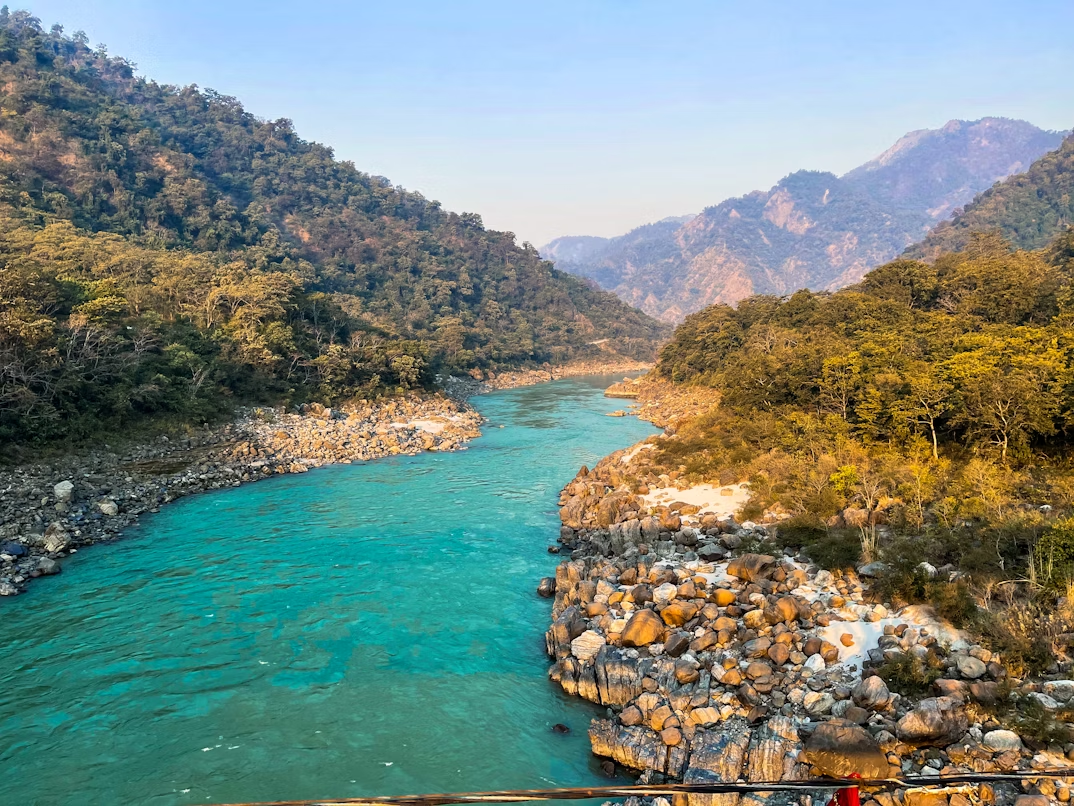
The Ganges River begins its journey at the Gangotri Glacier in the Uttarkashi district of Uttarakhand, India, at an elevation of approximately 3,892 meters above sea level. The glacier feeds the Bhagirathi River, which converges with the Alaknanda River at Devprayag to form the Ganges. This sacred confluence marks the official start of the river’s 2,525-kilometer journey to the Bay of Bengal.
From its origin, the Ganges flows southeast through the Gangetic Plain, a fertile alluvial region that stretches across Uttar Pradesh, Bihar, and West Bengal. Major tributaries, including the Yamuna, Ghaghara, Gandak, and Kosi, join the Ganges, significantly increasing its volume. After entering Bangladesh, the river merges with the Brahmaputra and Meghna rivers, forming the world’s largest delta, the Sundarbans, before emptying into the Bay of Bengal. The delta, shared between India and Bangladesh, spans over 60,000 square kilometers and is a UNESCO World Heritage Site.
Basin and Tributaries
The Ganges Basin encompasses parts of India, Nepal, China (Tibet), and Bangladesh, making it a transboundary river system. The basin is divided into upper, middle, and lower regions, each with distinct geographical features. The upper basin, in the Himalayas, is characterized by steep gradients and glacial feeds, while the middle basin, the Gangetic Plain, is a flat, fertile expanse ideal for agriculture. The lower basin includes the delta region, with its intricate network of distributaries and mangrove forests.
Key tributaries contribute to the Ganges’ vast water flow:
- Yamuna: The largest tributary, originating from the Yamunotri Glacier, joins the Ganges at Allahabad (Prayagraj), forming the Triveni Sangam, a sacred site.
- Ghaghara: Rising in the Himalayas, it brings significant water from Nepal and joins near Chhapra in Bihar.
- Gandak and Kosi: These rivers, also originating in Nepal, are known for their sediment load, shaping the delta’s landscape.
- Son and Damodar: These eastern tributaries add to the river’s volume and support industrial regions.
The Ganges Delta, where the river meets the sea, is a dynamic ecosystem influenced by tidal movements and sediment deposition, creating a unique blend of freshwater and saltwater habitats.
Hydrological Characteristics
Flow and Seasonality
The Ganges exhibits a pronounced seasonal flow pattern driven by the Indian monsoon. The river swells dramatically between June and September, when monsoon rains contribute up to 80% of its annual flow. During this period, discharge can exceed 70,000 cubic meters per second, causing widespread flooding in the Gangetic Plain. The dry season, from November to May, sees reduced flow, relying heavily on glacial melt and groundwater, with discharge dropping to around 2,000–3,000 cubic meters per second.
Glacial melt from the Himalayas, particularly the Gangotri and other upstream glaciers, sustains the river during the lean season. However, climate change-induced glacier retreat poses a long-term threat to this water supply. The river’s gradient decreases from the mountains to the plains, slowing its flow and allowing sediment to settle, enriching the soil of the Gangetic Plain.
Sediment Load and Erosion
The Ganges carries one of the highest sediment loads of any river globally, estimated at 520 million tons annually. This sediment, eroded from the Himalayas, is rich in nutrients like silt and clay, making the Gangetic Plain one of the most fertile agricultural regions in the world. However, the high sediment load also leads to riverbed aggradation, raising the river’s level and increasing flood risk. Erosion along the banks, particularly in the middle and lower basins, displaces communities and alters the river’s course over time.
Water Quality
The Ganges’ water quality varies along its course. In its upper reaches, it remains relatively pristine, with low pollution levels due to minimal human intervention. However, as it flows through densely populated and industrialized areas, it becomes heavily polluted with domestic sewage, industrial effluents, and agricultural runoff. High levels of coliform bacteria, heavy metals, and organic pollutants have degraded its water quality, posing health risks to those who depend on it.
Ecological Richness
Biodiversity
The Ganges River System supports an extraordinary biodiversity, encompassing aquatic, terrestrial, and avian species. The upper Himalayan region hosts snow leopards, Himalayan tahr, and numerous fish species adapted to cold, fast-flowing waters. The Gangetic Plain is home to the Gangetic dolphin, a critically endangered freshwater cetacean found only in this river system. The Sundarbans Delta is a global hotspot for biodiversity, sheltering the Bengal tiger, saltwater crocodiles, and over 300 bird species.
The river’s wetlands, such as the Bhitarkanika Mangroves and the Kanwar Lake, serve as critical habitats for migratory birds and support a variety of fish, including the iconic hilsa. The Ganges’ floodplains also foster lush vegetation, including grasses, reeds, and water lilies, which sustain local wildlife.
Ecosystem Services
The Ganges provides essential ecosystem services, including water purification, flood regulation, and nutrient cycling. Its wetlands act as natural filters, removing pollutants and supporting agriculture through seasonal flooding. The river’s fisheries are a vital protein source for millions, while its floodplains recharge groundwater, sustaining wells and boreholes in the region.
Cultural and Spiritual Significance
Religious Importance
The Ganges is the holiest river in Hinduism, embodying the goddess Ganga, who is believed to purify sins and grant moksha (liberation). Millions undertake pilgrimages to sacred sites like Haridwar, Varanasi, and Prayagraj, where rituals such as bathing and the immersion of ashes are performed. The Kumbh Mela, a massive religious gathering held every 12 years at Prayagraj, attracts tens of millions, underscoring the river’s spiritual centrality.
Cultural Heritage
The Ganges has shaped India’s cultural landscape for millennia. Ancient civilizations, such as the Vedic society, flourished along its banks, leaving behind archaeological treasures like the ruins of Hastinapur. The river inspires literature, art, and music, with its banks hosting festivals like Ganga Dussehra, celebrating its divine descent to Earth.
Environmental Challenges
Pollution
Pollution is the Ganges’ most pressing issue. Over 1 billion liters of untreated sewage and 500 million liters of industrial waste are discharged into the river daily. Cities like Kanpur and Varanasi contribute significant organic and chemical pollutants, including leather tannery effluents and pesticides. The use of the river for cremation and idol immersion during festivals further adds to the contamination.
Dams and Diversions
Dams, such as the Tehri Dam on the Bhagirathi and the Farakka Barrage, alter the river’s natural flow. While these structures provide hydroelectric power and irrigation, they disrupt aquatic ecosystems, block fish migration, and reduce downstream water availability, exacerbating conflicts with Bangladesh over water sharing.
Climate Change
Rising temperatures and shrinking Himalayan glaciers threaten the Ganges’ long-term flow. Studies predict a 20–30% reduction in glacial melt by 2050, potentially leading to water scarcity during the dry season. Increased monsoon variability also heightens flood risks, damaging infrastructure and displacing communities.
Conservation Efforts
Government Initiatives
The Indian government launched the Namami Gange Programme in 2014 to clean and rejuvenate the Ganges. This multi-billion-dollar initiative focuses on sewage treatment, riverfront development, and public awareness. The Ganga Action Plan (1986) and its successor, the National Mission for Clean Ganga (NMCG), have built numerous sewage treatment plants, though challenges remain in implementation.
Community and NGO Involvement
Local communities and NGOs play a crucial role in conservation. The Ganga Vichar Manch and other grassroots movements promote traditional practices like afforestation and organic farming to reduce pollution. The Sankat Mochan Foundation in Varanasi advocates for sustainable waste management and public education.
International Cooperation
As a transboundary river, the Ganges requires regional collaboration. India and Bangladesh have engaged in water-sharing agreements, such as the 1996 Ganges Water Treaty, to manage flow during the dry season. Joint efforts to protect the Sundarbans and monitor water quality are ongoing, though political tensions occasionally hinder progress.
Economic Importance
Agriculture
The Ganges Basin supports over 40% of India’s agricultural production, including rice, wheat, sugarcane, and lentils. The fertile alluvial soil, replenished by annual flooding, sustains the Green Revolution, making the region a breadbasket for the nation.
Industry and Trade
The river facilitates industrial growth, with cities like Kanpur (leather), Varanasi (textiles), and Kolkata (port activities) relying on its water. The Haldia Port in the delta is a key trade hub, exporting goods like jute and tea.
Tourism and Fisheries
The Ganges attracts millions of tourists for its spiritual sites and natural beauty, boosting local economies. Its fisheries, particularly the hilsa catch, support livelihoods in India and Bangladesh, contributing to food security.
Future Prospects
Sustainable Management
Sustainable water management, including efficient irrigation and rainwater harvesting, is essential to balance human needs with ecological health. Reforestation in the upper basin can stabilize glaciers and reduce erosion.
Technological Innovations
Advanced technologies, such as real-time water quality monitoring and eco-friendly waste treatment, can enhance conservation efforts. Floating solar panels on the river could generate renewable energy while reducing evaporation.
Climate Resilience
Building climate-resilient infrastructure, such as flood-resistant embankments and drought-proof storage, will help communities adapt to changing conditions. International funding and research can support these initiatives.
Conclusion
The Ganges River System is a lifeline that weaves together the ecological, cultural, and economic fabric of the Indian subcontinent. Its journey from the Himalayan glaciers to the Bay of Bengal reflects the interplay of nature and human civilization, sustaining a rich biodiversity and a vibrant cultural heritage. Yet, it faces unprecedented threats from pollution, dam construction, and climate change, necessitating urgent action. Through government programs, community efforts, and international cooperation, there is hope to restore the Ganges’ pristine glory. This river, revered as a goddess and a provider, stands as a symbol of resilience, urging humanity to protect and preserve its legacy for generations to come.



Leave a Reply to 50 Incredible Indian Places That Exist Only Because of Unique Geography – IndiaGeographiesCancel reply