
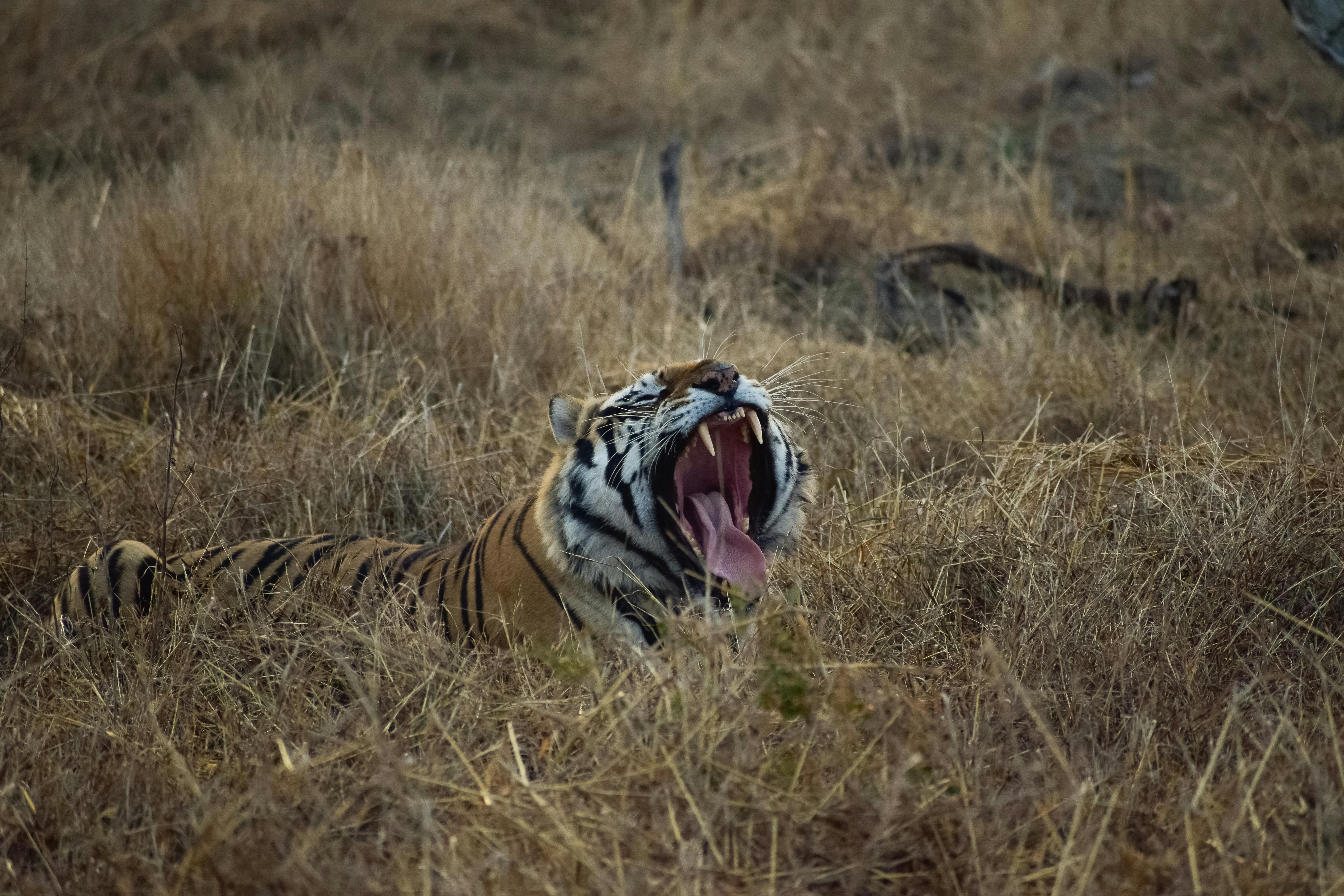
Where the Ken River carves through canyons and tiger calls echo in the teak forests. This is Panna National Park: a raw, unfiltered wilderness of gharials, vultures, and legends waiting just beneath the green. Answer its call.
Table of Contents
- Conclusion

Quick Facts About Panna National Park
- Location: Panna and Chhatarpur Districts, Madhya Pradesh, India
- Established: 1981 (National Park), 1994 (Tiger Reserve)
- Area: 542.67 sq km (core area), 1,598.1 sq km (including buffer zone)
- Biome: Tropical dry deciduous forests, grasslands, riverine habitats
- Key Features: Part of Project Tiger, Ken River, Raneh Falls, Ken Gharial Sanctuary, UNESCO Biosphere Reserve (2020), tiger reintroduction success
- Flora: 1,255+ plant species, including teak, mahua, tendu, kardhai, salai, and grasses
- Fauna: 40+ mammals (e.g., Bengal tiger, Indian leopard, sloth bear, chital, gharial), 200+ bird species (e.g., Indian vulture, paradise flycatcher), numerous butterflies and reptiles
- Best Time to Visit: October to June (peak: February–May for tiger sightings)
- Nearest Town: Khajuraho (25–45 km from park gates)
- Entry Fee: ₹1,500–2,500 (Indians, per vehicle), ₹3,000–4,500 (foreigners, per vehicle); camera fees extra
- Permits: Required for safaris; book via mp.gov.in or Madla/Hinauta gates
- Timings: 5:30 AM–9:00 AM, 4:00 PM–7:00 PM (summer); 6:00 AM–9:30 AM, 2:30 PM–5:30 PM (winter); closed Wednesdays PM
Introduction to Panna National Park

Panna National Park, spanning 542.67 square kilometers in Madhya Pradesh’s Panna and Chhatarpur districts, is a celebrated Tiger Reserve and UNESCO Biosphere Reserve (2020).
Established as a national park in 1981 and a Tiger Reserve in 1994, it is renowned for its dramatic tiger reintroduction success after losing all tigers to poaching by 2009. Located 25–45 km from Khajuraho, a UNESCO World Heritage Site, Panna’s landscape of dry deciduous forests, grasslands, and the Ken River offers a haven for wildlife enthusiasts. Known as the “Emerald Forest,” it features Raneh Falls, Ken Gharial Sanctuary, and a rich cultural history tied to the Bundelkhand region. Jeep, boat, and walking safaris provide immersive experiences, showcasing Bengal tigers, leopards, and over 200 bird species.
The Unique Ecosystem of the Vindhya Hills

Situated at 24°16’–24°59’N and 79°29’–80°16’E, Panna lies in the Vindhya Hills at elevations from 211.2 meters (near Ken River) to 540 meters (Talgaon Plateau). Its semi-arid to dry sub-humid climate brings 1,100 mm of annual rainfall (757–1,885 mm), mostly during the monsoon (July–September), with temperatures ranging from 5°C (winter) to 45°C (summer). The Ken River, a lifeline flowing south to north, supports diverse habitats, including dry deciduous forests, open grasslands, and riverine zones. The park’s plateaus (Hinauta, Talgaon) and gorges like Dhundwa Seha create a mosaic of teak, kardhai, and savanna woodlands, linking eastern and western wildlife populations via the Vindhya range.
A Biodiversity Hotspot
Panna hosts over 1,255 plant species, including teak, mahua, tendu, kardhai, salai, and grasses like Gundli. Its fauna includes 40+ mammal species, such as Bengal tiger, Indian leopard, sloth bear, chital, sambar, nilgai, chinkara, four-horned antelope, rusty-spotted cat, and striped hyena. The park is a birdwatcher’s paradise with 200+ species, including Indian vulture, paradise flycatcher, crested hawk-eagle, and bar-headed goose. Reptiles like gharials, mugger crocodiles, and snakes thrive along the Ken River, alongside numerous butterflies. Panna’s cliffs, notably Dhundwa Seha (Vulture Point), support seven of India’s nine vulture species, making it a critical conservation site.
The Exploration Experience
Panna’s regulated access ensures minimal disturbance to its ecosystem. Key activities include:

- Jeep Safaris: Available in Madla and Hinauta zones (₹1,500–4,500/vehicle), ideal for tiger and leopard sightings. Book via mp.gov.in or at gates.
- Boat Safaris: Ken River tours (₹1,000–2,000/boat) offer views of gharials and crocodiles.
- Night Patrol Safaris: Buffer zone jeep tours (₹2,000–3,000) reveal nocturnal species like leopards.
- Walking Safaris: Guided trails (₹500–1,000) in buffer zones explore flora and smaller fauna with Pardhi tribal guides.
- Raneh Falls: A 5 km canyon with crystalline granite, accessible by jeep (₹200–500 entry).
- Ken Gharial Sanctuary: A 13.5 sq km reserve for gharial conservation, accessible via safaris.
Safaris start from Madla or Hinauta gates, with mandatory guides (₹400–480). The Madla track (20 km) is popular for tiger sightings.
A Conservation Success Story

Panna’s tiger population was decimated by poaching by 2009, but a reintroduction program led by R. Shreenivasa Murthy translocated tigers from Bandhavgarh, Kanha, and Pench, resulting in over 70 tigers by 2021, including 20–25 cubs. The park, part of the former Gangau Wildlife Sanctuary (1975), received the Award of Excellence in 2007 for exemplary management. Anti-poaching patrols, habitat restoration, and community engagement with Gond and Pardhi tribes have bolstered conservation. The UNESCO Biosphere Reserve designation (2020) underscores its global significance, though the proposed Ken-Betwa river-linking project threatens 400 hectares of the reserve.
Best Time to Visit Panna National Park
October to June is ideal, with February to May offering peak tiger sightings due to animals gathering at waterholes. Winter (November–February) is best for birdwatching (10°C–25°C). The park closes during the monsoon (July–September) due to flooding. Book safaris early, as entries are limited to 30–40 vehicles daily per zone.
How to Reach Panna National Park
The park is accessible via:
- By Air: Khajuraho Airport (25–45 km, 1 hour, taxis ₹1,000–2,000).
- By Train: Satna (70 km, 1.5 hours) or Khajuraho (45 km, 1 hour), with taxis or buses (₹500–1,000).
- By Road: From Khajuraho (25–45 km, 1 hour), Bhopal (370 km, 8 hours), or Jabalpur (210 km, 5 hours) via NH43. MPSTDC buses (₹100–300) or taxis (₹1,500–3,000) reach Madla/Hinauta gates.
- Permits: Book at Madla/Hinauta gates (Tel: +91-7732-252135) or online via mp.gov.in.
Tips for Visiting Panna National Park
- Book Early: Secure safari permits online or at gates; limited to 30–40 vehicles daily.
- Pack Essentials: Wear earthy clothing (olive, beige), sturdy shoes, and carry water (2L), binoculars, sunscreen, and insect repellent. No food facilities inside.
- Hire Guides: Mandatory guides (included in fees) enhance sightings and ensure safety.
- Follow Rules: No littering, maintain silence, and stick to routes due to wildlife risks. Plastic is banned.
- Accommodation: Stay at forest rest houses (₹1,500–3,000, book via MP Forest Department) or resorts near Madla (e.g., Ken River Lodge, ₹3,000–6,000).
- Night Safaris: Book night patrols for unique nocturnal sightings; confirm availability at gates.
Cultural and Local Attractions
- Khajuraho: 25–45 km away, a UNESCO World Heritage Site with Hindu and Jain temples.
- Raneh Falls: 20 km from Madla, a 5 km canyon with colorful granite and waterfalls.
- Ken Gharial Sanctuary: Adjacent to the park, known for gharial and crocodile conservation.
- Brihaspati Kund: 25 km away, Bundelkhand’s highest waterfall with mythological significance.
- Kalinjar Fort: 60 km away, a historic fort with Gupta-era ruins.
Sustainable Tourism in Panna National Park
Panna promotes sustainable tourism through limited vehicle entries, a no-plastic policy, and mandatory guides from Gond and Pardhi communities. The Madhya Pradesh Forest Department’s Eco-development Committees organize safaris and homestays, minimizing environmental impact. Visitors are encouraged to buy local handicrafts, honey, and mahua products, supporting tribal livelihoods and conservation efforts.
Wildlife Photography and Research Opportunities
Panna’s gorges, Ken River, and plateaus are ideal for photographing tigers, leopards, and vultures, especially at Dhundwa Seha (Vulture Point). Early morning safaris offer optimal lighting for macro shots of butterflies and flora. Researchers can study tiger reintroduction, gharial conservation, or vulture populations, with support from the Madhya Pradesh Forest Department. Photography permits (₹500–1,000) are required, obtainable from Madla/Hinauta gates.
Culinary Delights of the Region
Madhya Pradesh’s cuisine enhances the Panna experience:
- Poha: Flattened rice with spices and onions, a breakfast staple.
- Bhutte ka Kees: Grated corn with spices and milk.
- Dal Bafla: Wheat dumplings with lentil curry.
- Mawa Bati: Sweet stuffed dumplings, a local dessert.
- Mahua Liquor: A tribal drink from fermented mahua flowers.
Eateries in Khajuraho or Madla (e.g., Ken River Lodge restaurant) serve authentic dishes. Carry snacks, as park dining is unavailable.
Conclusion
Panna National Park, a 542.67 sq km sanctuary in Madhya Pradesh’s Vindhya Hills, is a testament to India’s conservation triumphs, particularly its tiger reintroduction program. Its dry deciduous forests, Ken River, and Raneh Falls create a stunning backdrop for jeep, boat, and walking safaris, showcasing Bengal tigers, leopards, and vultures. With proximity to Khajuraho’s cultural treasures and sustainable tourism initiatives involving local tribes, Panna offers an immersive blend of wildlife, history, and adventure, making it a must-visit for nature and culture enthusiasts.
Panna National Park offers a truly wild and breathtaking safari experience with incredible tiger sightings and diverse landscapes. However, the experience is heavily dependent on the quality of your guide and driver, and the booking process can be unfairly expensive for foreign tourists. While the park itself is a 5-star wilderness, logistical challenges and inconsistent staff performance prevent it from being a perfect 5-star experience for all visitors.


FAQs
1. What is the best time to visit Panna National Park for wildlife sightings?
The park is open from October to June. The cooler months (October to February) are the most pleasant for visiting. While April is very hot, it can offer excellent tiger sightings near water sources, though the shorter evening safari timings can be a constraint.
2. How can I book a safari and avoid being overcharged?
Book directly through the official Madhya Pradesh Online Safari Booking website.
A shared jeep safari should cost around ₹1,650 per person plus guide fees. Be wary of third-party tour operators, especially as a foreign tourist, as they can charge exorbitant commissions (e.g., ₹6,500 for two people).
3. Which is the best gate for safari in Panna National Park?
Madla Gate is considered the core zone with the highest probability of tiger sightings. The park’s three core zones (Madla, Akola, Hinouta) are interconnected, meaning you can enter through one and exit through another if there’s a sighting reported elsewhere.
4. Are the guides and drivers reliable?
Experiences vary greatly. Some guides are excellent, while others are reported to be lazy and unengaged. You are randomly assigned a guide, so it’s a matter of luck. There is no system to request or choose a specific guide.
5. What is the cost of a safari?
The jeep fee is ₹2,500 (for up to 6 people), and the mandatory guide fee is ₹480. The entrance fee is additional: ₹2,450 on weekdays and ₹3,050 on weekends. These are the official rates for Indian nationals; foreign nationals pay higher entrance fees.
6. What wildlife can I expect to see?
The park is rich in biodiversity. Commonly spotted animals include tigers, leopards, sloth bears, sambar deer, spotted deer, langurs, wild boars, jackals, and crocodiles (gharials). It’s also an excellent birding destination.
7. Is there a boat safari available at Panna National Park?
Yes, a boat safari on the Ken River is highly recommended. It offers a unique perspective of the park’s landscape and has been the source of incredible sightings, including tigers with cubs near the riverbank.
8. What are the stay options near the Panna National Park?
There are several good options. The MPT Guest House is located adjacent to the Madla gate for convenience. Homestays like Sadna Sadan near Madla are also well-reviewed by visitors.
9. How do I get to Panna National Park?
The nearest airport is Khajuraho Airport (HJR), approximately 45 minutes away. The nearest major railway stations are Khajuraho Railway Station and Satna Railway Station. From there, you can hire a taxi to reach the park gates.
10. What should I know about the safari experience itself?
Be prepared for dusty and bumpy roads. Vehicles often follow each other closely, creating a lot of dust. The evening safari in summer ends early (around 6:45 PM), requiring you to leave prime sighting areas before the light fades completely to reach the exit gate on time.



Leave a Reply