
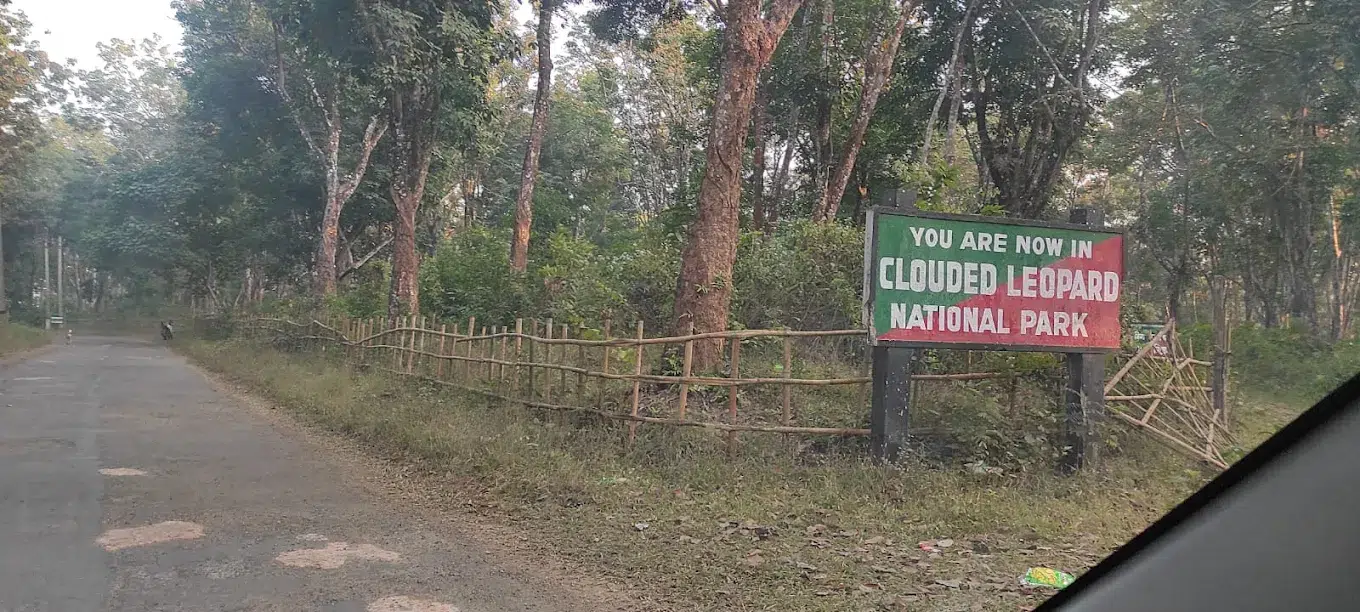
Clouded Leopard National Park in Tripura is one of the most unique wildlife destinations in India. Located inside the Sipahijala Wildlife Sanctuary, this park is home to the rare and beautiful clouded leopard. If you love nature, wildlife, and peaceful forest surroundings, this place is worth exploring.
Table of Contents
Quick Facts About Clouded Leopard National Park
- Location: West Tripura District, Tripura, India
- Established: 2007 (National Park)
- Area: 5.08 sq km (within Sepahijala Wildlife Sanctuary, 18.53 sq km)
- Biome: Tropical moist deciduous forests, woodlands, wetlands
- Key Features: India’s first park dedicated to clouded leopards, part of Sepahijala Wildlife Sanctuary, home to Phayre’s langur, artificial lake
- Flora: 150+ plant species, including sal, bamboo, garjan, chamal, pichla, bahera, amlaki
- Fauna: 30+ mammals (e.g., clouded leopard, leopard, Phayre’s langur, capped langur, slow loris), 150+ bird species (e.g., open-billed stork, white ibis, hornbill), reptiles (e.g., python, monitor lizard)
- Best Time to Visit: November to March (peak: December–February for pleasant weather)
- Nearest Town: Bishalgarh (5 km), Agartala (28 km)
- Entry Fee: ₹50 (adults), ₹20 (children); camera: ₹50–100; boating: ₹100–200
- Permits: Required for park entry and camping; contact Tripura Forest Department (+91-381-241-0073, forest.tripura.gov.in)
- Timings: 9:00 AM–5:00 PM (zoo and sanctuary); closed July–September for heavy monsoon
Introduction to Clouded Leopard National Park

Clouded Leopard National Park, a 5.08 sq km sanctuary within the Sepahijala Wildlife Sanctuary in Tripura, was established in 2007 as India’s first park dedicated to the elusive clouded leopard (Neofelis nebulosa), a vulnerable species on the IUCN Red List.
Located 28 km from Agartala, the state capital, the park is nestled in lush tropical forests and features an artificial lake, botanical garden, and zoo.
Renowned for its captive clouded leopard enclosures and abundant primate populations like Phayre’s langur, it offers a serene retreat for wildlife enthusiasts. The park’s proximity to cultural sites like Ujjayanta Palace enhances its appeal as a biodiversity and ecotourism hotspot.
The Unique Ecosystem of Sepahijala
Situated at 23°39’–23°44’N and 91°15’–91°20’E, the park lies within the Sepahijala Wildlife Sanctuary at elevations of 20–50 m. Its tropical climate brings 2,024 mm of annual rainfall, mostly from July to September, with temperatures from 15°C (winter) to 35°C (summer, March–April).
The ecosystem comprises tropical moist deciduous forests, woodlands, and wetlands, with an artificial lake and streams feeding the Gomati River. The park’s lush greenery and temperate climate, except during humid summers, support diverse flora and fauna. It integrates with Sepahijala’s 18.53 sq km, forming a critical conservation zone in Tripura’s biodiversity-rich landscape.
A Biodiversity Hotspot

The park hosts over 150 plant species, including sal, bamboo, garjan, chamal, pichla, bahera, amlaki, and nageshwar, alongside coffee plantations and orchids. Its fauna includes 30+ mammals, such as clouded leopard (captive and wild), leopard, Phayre’s langur (spectacled langur), capped langur, slow loris, rhesus macaque, pig-tailed macaque, barking deer, wild pig, and civets. Over 150 bird species, including open-billed stork, white ibis, lesser whistling teal, hornbill, and peafowl, make it a birdwatcher’s haven, especially for migratory species in winter. Reptiles like pythons and monitor lizards also thrive. The park’s focus on clouded leopard conservation underscores its ecological significance.
The Exploration Experience
Access to the park is regulated to protect its biodiversity, with activities centered on:

- Zoo and Captive Enclosures: At Sepahijala, view clouded leopards, Phayre’s langur, and Royal Bengal tigers (₹50 entry, 9:00 AM–5:00 PM).
- Guided Treks: Limited trails (₹500–1,000, 1–2 hours) in the sanctuary explore primate habitats and birdwatching spots, requiring permits.
- Boating: Artificial lake rides (₹100–200, 30 minutes) offer scenic views and birdwatching opportunities.
- Botanical Garden: Showcases orchids, coffee plantations, and native flora (included in entry fee).
- Birdwatching: Winter tours (₹300–500) target migratory birds like storks and ibises.
Permits for treks and camping are mandatory, obtainable from the Tripura Forest Department in Agartala (+91-381-241-0073, forest.tripura.gov.in). The zoo and lake are key attractions for families.
Why Are Clouded Leopards Endangered?

The IUCN (International Union for Conservation of Nature) lists clouded leopards as a vulnerable species. Their population is decreasing because of:
- Habitat loss (deforestation, shrinking forests)
- Hunting and poaching
- Human–wildlife conflict
- Forest fragmentation
Because of these threats, conservation parks like the one in Tripura play a very important role in protecting the species.
A Conservation Success Story
Established in 2007, Clouded Leopard National Park focuses on ex-situ conservation of the vulnerable clouded leopard, listed under CITES Appendix I. The Sepahijala Wildlife Sanctuary, encompassing the park, bans hunting, grazing, and cultivation to protect biodiversity.
Conservation efforts include captive breeding of clouded leopards and habitat preservation for primates like Phayre’s langur. Challenges include human-wildlife conflict and limited tourism infrastructure, addressed through community engagement with local tribes as guides and strict regulations. The park’s role in preserving Tripura’s natural heritage is vital, with ongoing efforts to monitor clouded leopard populations.
Best Time to Visit Clouded Leopard National Park
November to March is ideal, with December to February offering temperate weather (15°C–25°C) and clear skies for wildlife viewing and boating. Winter attracts migratory birds like whistling teal. Avoid July to September due to heavy rainfall, which halts tourism activities. Book permits 15–30 days in advance, as entries are limited to small groups.
How to Reach Clouded Leopard National Park
The park is accessible via:
- By Air: Maharaja Bir Bikram Airport, Agartala (35 km, 1 hour, taxis ₹1,000–2,000).
- By Train: Agartala Railway Station (28 km, 45 minutes, taxis ₹500–1,000) or Kumarghat (157 km, 3–4 hours).
- By Road: From Agartala (28 km) or Bishalgarh (5 km) via NH-8. Buses from Agartala to Bishalgarh (₹20–50), then auto-rickshaws to the park (₹50–100). Contact: Tripura Forest Department (+91-381-241-0073).
- Permits: Obtain from forest.tripura.gov.in or Sepahijala’s entry gate.
Tips for Visiting Clouded Leopard National Park
- Book Early: Secure permits and guides via the forest department; limited to small groups.
- Pack Essentials: Wear light clothing, comfortable shoes, and carry water (2L), insect repellent, and binoculars. No dining facilities inside; carry snacks.
- Hire Guides: Mandatory for treks (₹500–1,000); book via forest office.
- Follow Rules: No littering, stick to designated areas, and respect wildlife. Plastic is banned.
- Accommodation: Stay at Abasarika Forest Bungalow inside the park (₹1,000–2,000, book via forest department) or hotels in Agartala (e.g., Hotel Sonar Tori, ₹2,000–4,000).
- Note: Check for monsoon closures; carry cash for fees.
Cultural and Local Attractions
- Sepahijala Zoo: Within the sanctuary, features clouded leopards and primates.
- Ujjayanta Palace: 28 km away in Agartala, a historic royal museum.
- Tripurasundari Temple: 30 km away, a Shakti Peeth with cultural significance.
- Neermahal: 50 km away, a water palace on Rudrasagar Lake.
- Dumboor Lake: 120 km away, a scenic spot for boating and birdwatching.
Sustainable Tourism in Clouded Leopard National Park

The park enforces a no-plastic policy, limited entries, and guided tours to minimize impact. Revenue from fees (₹20–100) supports clouded leopard breeding and local community livelihoods. Visitors are encouraged to buy tribal handicrafts and respect the ecosystem, ensuring sustainable tourism.
Wildlife Photography and Research Opportunities
The park’s forests and lake are ideal for photographing clouded leopards (in enclosures), Phayre’s langur, and migratory birds like hornbills. Researchers can study primate behavior or clouded leopard ecology, with permits from the Tripura Forest Department. Photography permits (₹50–100) are required.
Culinary Delights of the Region
Tripura’s cuisine enhances the experience:
- Mui Borok: Rice-based dish with fish or meat.
- Wahan Mosdeng: Pork curry with green chilies.
- Gudok: Fermented fish stew.
- Bhangui: Bamboo shoot curry.
- Pea Soup: Yellow pea broth with spices.
Agartala’s eateries (e.g., Bawarchi Restaurant, ₹100–300/meal) serve local dishes. Carry snacks, as park dining is unavailable.
Why You Should Visit

Clouded Leopard National Park is perfect for:
- Wildlife enthusiasts
- Nature photographers
- Families
- Students
- Anyone who wants a quiet and refreshing nature experience
The park offers learning, adventure, and a close look at Tripura’s natural beauty.
Conclusion
Clouded Leopard National Park, a 5.08 sq km sanctuary in Tripura’s Sepahijala Wildlife Sanctuary, is India’s first park dedicated to the vulnerable clouded leopard. Its tropical forests, artificial lake, and rich biodiversity, including Phayre’s langur and migratory birds, offer zoo visits, boating, and guided treks. With sustainable tourism and cultural attractions like Ujjayanta Palace nearby, the park is a must-visit for wildlife lovers exploring Northeast India’s natural heritage.
Clouded Leopard National Park is truly a wildlife treasure of Tripura. Its rich forests, rare animals, and strong conservation efforts make it a must-visit destination in Northeast India.
FAQs
1. Why is the Clouded Leopard so rare?
Clouded leopards are rare because their population is very low—less than 10,000 remain in the wild. They face threats like habitat loss, hunting, and human–wildlife conflict, which makes them an endangered species.
2. Was a Clouded Leopard recently spotted in India?
Yes. A rare sighting of a clouded leopard with her cubs in the forests of Northeast India recently went viral. Indian Forest Service officer Sushant Nanda shared the video on social media, calling the sight “extraordinary and magical.”
3. What is special about Clouded Leopard National Park?
The park is known for:
- Dense green forests
- Rich biodiversity
- Clouded leopards
- Monkeys, deer, reptiles, and rare birds
- Peaceful walking trails
- A small zoo area
- A calm and scenic lake
It offers a serene nature experience for families, wildlife lovers, and photographers.
4. Is there a zoological park inside Clouded Leopard National Park?
Yes. There is a Sipahijala Zoological Park inside the national park. It is surrounded by nature, giving visitors a real forest-like experience.
5. What is the entry fee for the zoological park?
The entry fee is ₹100 per person (as per visitor reviews). Fees may change, so it’s best to check before visiting.
6. Is Clouded Leopard National Park good for families?
Yes. The park has easy walking paths, animal enclosures, and a peaceful environment, making it wonderful for families, kids, and nature lovers.
7. What do visitors say about the park?
Visitors describe it as:
- “Serene and beautiful”
- “Nature surrounded”
- “Feels like the real forest”
- “A must-visit place to experience nature”
Many also appreciate the overall experience and call it memorable and refreshing.



Leave a Reply